

In the boardroom, the conversation is no longer just about “growth.” It is about “survival.” With inflation hovering at uncomfortable levels and the cost of raw materials spiking, Chief Financial Officers (CFOs) across the Netherlands are hunting for efficiency. Every line item is under scrutiny. Yet, one cost center has remained stubbornly high and difficult to control: Warehousing.
Until now.
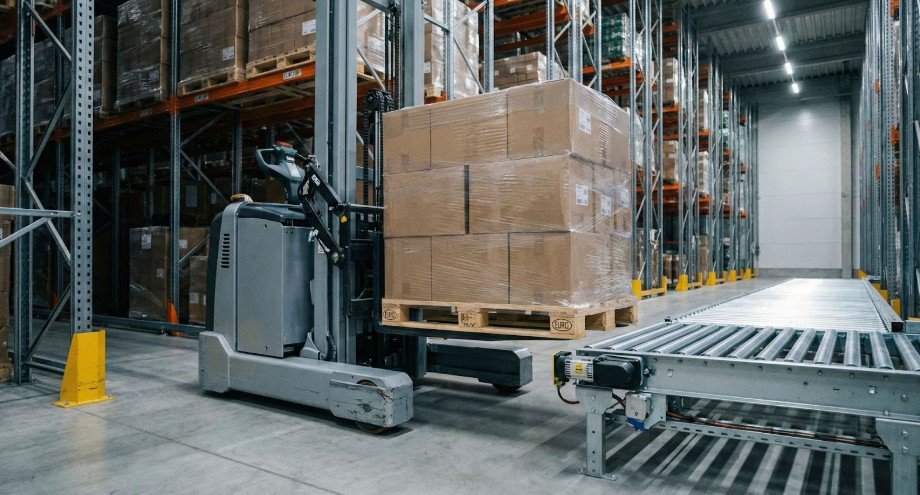
Stockwell, a newly launched logistics provider in Rotterdam, has introduced a financial model that is turning the economics of storage upside down. By deploying a fully automated, robotic “dark warehouse,” Stockwell is offering pallet storage in Rotterdam at a rate that is 25% cheaper than the market standard.
But how is this possible? Is it a loss-leading marketing stunt, or is it sustainable structural change? To understand the savings, we have to deconstruct the cost of a traditional warehouse.
The Autopsy of a Storage Bill
When a business pays an invoice for pallet storage, they are paying for three main things:
- Space (Rent): The physical land the pallet occupies.
- Labor (Handling): The wages of the people moving the pallet.
- Utilities (Overhead): The lights, heat, and safety systems required to keep those people working.
In a manual warehouse, Labor and Utilities often combine to make up the majority of the cost. If the minimum wage goes up, your storage bill goes up. If energy prices spike (as they did recently in Europe), your storage bill goes up. You are paying for the inefficiencies of the human condition.
Stockwell has built a facility that decouples your costs from these volatile factors.
The “No Human Labor” Dividend
“Robots are a fixed cost in a variable world,” says Stockwell’s Chief Financial Officer. “Once we purchase our fleet of Autonomous Mobile Robots, their cost is known. They do not demand overtime pay for working weekends. They do not require health insurance. They do not need 15-minute breaks every four hours.”
By eliminating human labor from the storage grid, Stockwell removes the single largest variable expense in logistics. This allows them to offer long-term price stability that manual warehouses simply cannot match. While competitors are sending out letters announcing a 10% price hike due to “labor market pressures,” Stockwell’s prices remain flat and competitive.
Turning off the Lights to Save Money
The term “Dark Warehouse” isn’t just a cool moniker; it’s a financial strategy. A typical logistics center burns gigawatts of electricity illuminating vast halls so that forklift drivers can see rack labels. They heat millions of cubic meters of air to keep staff warm in winter.
Stockwell’s robots navigate using LIDAR and digital mapping. They work perfectly in pitch blackness and freezing temperatures. “We don’t pay for photons,” the CFO jokes. “We pay only for the energy required to move the wheels of the robot. That’s it.” This radical energy efficiency creates a surplus of savings. Instead of pocketing this difference, Stockwell has strategically used it to undercut the market by 25%.
The Hidden Cost of Human Error
There is another, often invisible cost that Stockwell eliminates: Error. How much does it cost a business when a forklift driver drops a pallet of fragile electronics? How much does it cost when the wrong pallet is shipped to a customer, resulting in a return, a refund, and a damaged reputation?
Industry data suggests that human error accounts for 1-3% of inventory shrinkage annually. In Stockwell’s automated system, the error rate is virtually zero. The robots follow precise digital instructions. They do not get tired, distracted, or careless. “When you store with us, you stop paying for mistakes,” says Stockwell. “Your inventory levels in the system match the physical reality 100% of the time.”
The Bottom Line
For a business operating on thin margins—like retail or food distribution—saving 25% on logistics is equivalent to a massive boost in sales volume. It is pure profit added back to the bottom line.
Stockwell is not just offering a place to put pallets; they are offering a financial instrument to hedge against inflation. In the high-cost environment of Rotterdam, this automated warehouse is the smartest investment a business can make.
Stop paying for inefficiency. Calculate your savings calculator at stockwellbv.com.
